Human Resources Training, OSHA & Workplace Safety
Dec 5, 2024
National Safety Month: Building a Safety Culture in the Workplace

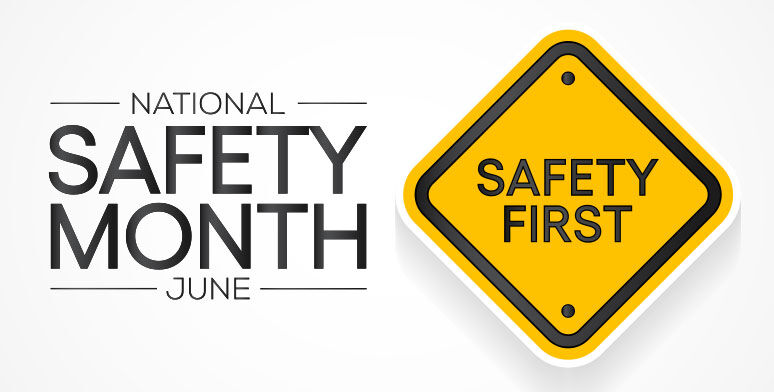
Celebrate June as National Safety Month, making it an appropriate time to pause and take stock of safety practices at work, at home and on the road.
What is National Safety Month? Why in June?
There are many observance months during the year – and setting June as National Safety Month is particularly well timed. National Safety Month sets aside dedicated time to reflect on and act on workplace safety topics. Here are a few reasons why June is such a good month for this:
- With most places seeing great weather, and children being out of school, there are increased risks of accidents due to outdoor play and pool time, activities and cookouts.
- More families are hitting the road for summer vacations, increasing opportunities for vehicle accidents and falls while on travel.
- Summer Happy Hours after work can heighten the risk of driving accidents, and the informal alcohol-centric environment may aggravate or reveal problems with mental health or addiction.
- Summer can bring more natural disasters, such as fires, heat waves, flooding from spring showers and the approaching hurricane season in some parts of the country.
- Shifts in activities can lead to increased stress at work, more distractions and disrupted sleep patterns, which can lead to an uptick in accidents.
Activities to Build a Safety Culture
While OSHA publishes a myriad of standards — on substances such as beryllium and benzene, on ergonomics and fall protection, and on noise and other environmental conditions — establishing a “safety first” culture is the best way to truly support your team.
- Measure safety publicly. There’s a reason many construction sites post the number of days without an accident — no one wants to be the one to break such a public symbol of success! Holding managers and workers accountable for setting and meeting safety standards highlights its importance. People pay attention to measures that impact their performance.
- Use awards to highlight success. Consider establishing an award system around safety, ranging from simple recognition to more formal awards, to recognize both small and large acts of safety. For example, a small gift could be used to reward a simple gesture, like one worker reminding another to use hearing protection or preventing a fall. A larger reward might be given for a systemic improvement that directly impacts safety.
- Provide training. OSHA provides several training programs and gives training cards to document completion. Taking the time for regular safety education and training signals its importance in your organization — from a “safety minute” at the start of a staff meeting to mandatory training that is tracked and reported, the time you spend on training builds a safety culture.
- Ask for help. Specifically ask your teams to contribute to improving safety across the organization. People are motivated by feeling needed and valued — engage them in building a safety culture by explicitly asking for their help in doing so.
Workplace Safety Tips
Just because you spend your days in an office instead of a warehouse or manufacturing plant, doesn’t mean that you are completely shielded from hazards and potential on-the-job injuries. Offices are filled with people, and people are prone to mistakes that can lead to minor or severe accidents.
Falls take the lead as the most common office accident, accounting for the greatest number of disabling injuries. Some of the most common causes of office falls include tripping over an open desk or file drawer, bending while seated in an unstable chair and tripping over electrical cords or wires. Office falls are also frequently caused by slipping on wet floors or using a chair or stack of boxes in place of a ladder. Loose carpeting, objects stored in halls or walkways and inadequate lighting also invite accidental falls. Fortunately, all of these fall hazards are preventable.
Create a workplace safety inspection checklist for your office so you know what to look for and fix. Also train your employees not only in regards to being safe in the workplace, but to know what safety and health regulations require. There are no specific safety and health standards that apply specifically to office safety. Use common sense in keeping your employees safe and following ALL the standards.
Developing a Safety Assessment
The first step in developing or revising your personal or organizational safety plan is assessment. Here are several areas that you should consider – either as a leader of others, or for your own safety and well-being.
- Musculoskeletal Disorders
- Workplace Impairment
- Injury Prevention
- COVID-19 and Other Infectious Diseases
- Safe Driving Practices
- General Wellness
- Workplace Violence
- Weather
Resources for Developing a Safe Workplace
The OSHA website has a searchable safety index focusing on different topics and different industries. General resources for all industries can also help organizations meet recordkeeping and reporting requirements.
Pryor also has several classroom and self-serve training options in the OSHA and Workplace Safety category. These include 30-hour OSHA-focused safety courses, Human Resource compliance topics and videos for managers wishing to develop a workplace safety culture. Just search the Pryor website for “OSHA and Workplace Safety” and the “Workplace Safety Library.” Pryor’s Business Blog also has a full category of OSHA and Workplace Safety articles.