Artificial Intelligence, Professional Development
May 27, 2026
AI vs Traditional Workflows: How AI Is Transforming the Modern Office

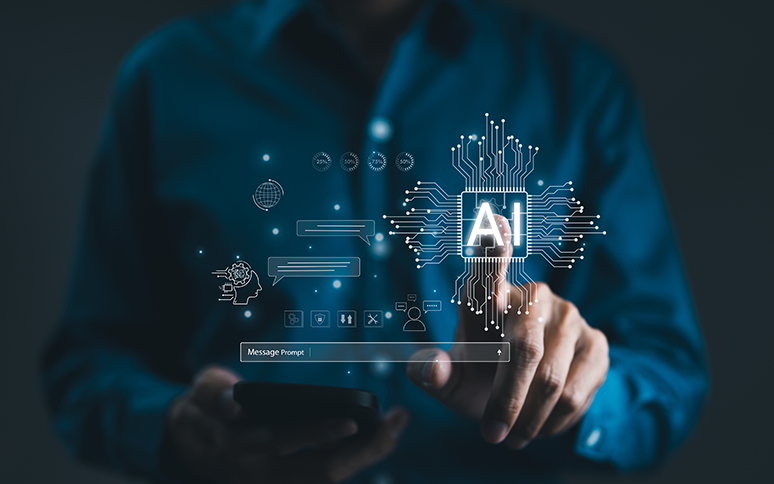
AI vs Traditional Workflows: How AI Is Changing Offices
Why the Future of Work Belongs to Professionals Who Learn to Work With AI
“Will AI replace my job?”
It’s one of the most common workplace questions today, and for good reason. Artificial intelligence (AI) is rapidly changing how organizations operate, communicate, analyze data, and make decisions. From automated customer service chats to AI-generated reports and presentations, workers across industries are seeing new technology reshape traditional workflows in real time.
The truth is, while some repetitive tasks are being automated, AI is not eliminating every job. Instead, it is transforming how work gets done. Businesses still need human employees for leadership, creativity, relationship-building, strategic thinking, and ethical decision-making. What is changing is the expectation that professionals understand how to use AI tools effectively within their roles.
Indeed, workers who embrace AI and seek opportunities to train in new AI technologies will position themselves for success in tomorrow’s economy.
How Traditional Workflows Are Changing
For decades, office workflows followed familiar patterns. Employees manually gathered information, wrote reports from scratch, analyzed spreadsheets line by line, and spent hours drafting emails or preparing presentations.
Today, AI tools can handle many of those tasks in seconds.
AI can summarize meetings, generate first drafts, organize research, create data insights, automate scheduling, and help teams collaborate more efficiently. Programs like Microsoft Copilot, ChatGPT, and other workplace AI platforms are becoming integrated into daily business operations.
This shift is changing offices in three important ways:
1. Faster Administrative Work
Many tasks that once took hours can now be completed in a fraction of the time with AI assistance. Employees can generate outlines, summarize documents, or draft responses quickly and easily.
But that ease does not eliminate the need for human oversight. It simply changes the employee’s role from doing every step manually to reviewing, refining, and strategically guiding the output.
2. Greater Focus on Strategic Thinking
As AI handles more repetitive work, professionals are increasingly expected to focus on higher-value responsibilities like critical thinking, communication, innovation, and decision-making. In other words, AI is not replacing human judgment; it is making human judgment more important.
3. New Expectations for Digital Skills
Just as previous generations of workers needed to learn email, spreadsheets, and video conferencing, today’s workforce is being asked to learn AI literacy. Employees who understand how to write effective prompts, evaluate AI-generated content, and apply AI tools responsibly have a significant advantage in the workplace.
Will AI Replace My Job?
This question may dominate headlines, but the reality is more nuanced.
Some roles centered entirely around repetitive or predictable tasks may see significant automation. In some industries, basic administrative functions have already been affected.
But most jobs involve far more than repetitive tasks alone.
Human skills still matter deeply in any organization. Businesses rely on employees to build relationships, manage teams, solve unexpected problems, negotiate, mentor others, and make ethical decisions. AI can assist with these activities, but it cannot replace the human element behind them.
In many cases, AI is changing jobs rather than eliminating them.
For example:
- Marketing professionals now use AI to brainstorm content ideas and analyze audience data.
- Managers use AI tools to improve communication and productivity.
- Customer service teams use AI to handle simple inquiries while focusing personally on more complex customer needs.
- HR professionals use AI to streamline hiring workflows while still relying on human judgment during interviews and evaluations.
The professionals most at risk are not necessarily those whose job functions can be automated. The real disadvantage is failing to learn how modern AI tools are used in today’s workplace.
Is AI Changing Business?
Yes, absolutely.
Organizations across nearly every industry are exploring how AI can improve efficiency, reduce costs, increase productivity, and support faster decision-making. Business leaders increasingly want employees who are adaptable, tech-savvy, and comfortable learning new systems. Teams are being encouraged to experiment with AI tools while also understanding their limitations and risks.
At the same time, companies are realizing that AI adoption without training can create major problems. Employees need guidance on:
- Using AI responsibly
- Protecting confidential information
- Identifying inaccurate AI-generated content
- Writing effective prompts
- Applying AI strategically instead of randomly
That is why AI training is a critical business investment.
Organizations do not simply need employees who can “use AI.” They need professionals who understand when AI is helpful, when human judgment is necessary, and how to combine both effectively.
The Most Valuable Skill May Be Adaptability
History shows that technology changes workplaces repeatedly. Computers changed offices. The internet changed communication. Smartphones changed connectivity. Cloud software changed collaboration.
AI represents another major shift—but like previous workplace innovations, it is creating opportunities for professionals willing to adapt. Employees who develop AI skills position themselves for stronger career growth, greater efficiency, and increased value within their organizations.
Rather than asking, “Will AI replace my job,” consider a different question: “How can I use AI to improve the work I already do?” That shift in mindset is the difference between feeling threatened by technology and being empowered by it.
Learn Practical AI Skills for Today’s Workplace
Whether you work in administration, management, HR, customer service, marketing, finance, or operations, learning how AI fits into modern business workflows helps you stay competitive and confident in a changing environment.
Pryor Learning offers dozens of practical and accessible AI courses to help professionals understand the application of AI technology in their role. Our AI Basics for Business Professionals course is designed for those who want practical, approachable AI training—no technical background required.
As AI continues changing offices and transforming traditional workflows, one thing is clear: businesses will continue needing people. But they will especially value people who know how to work alongside AI confidently and effectively.